
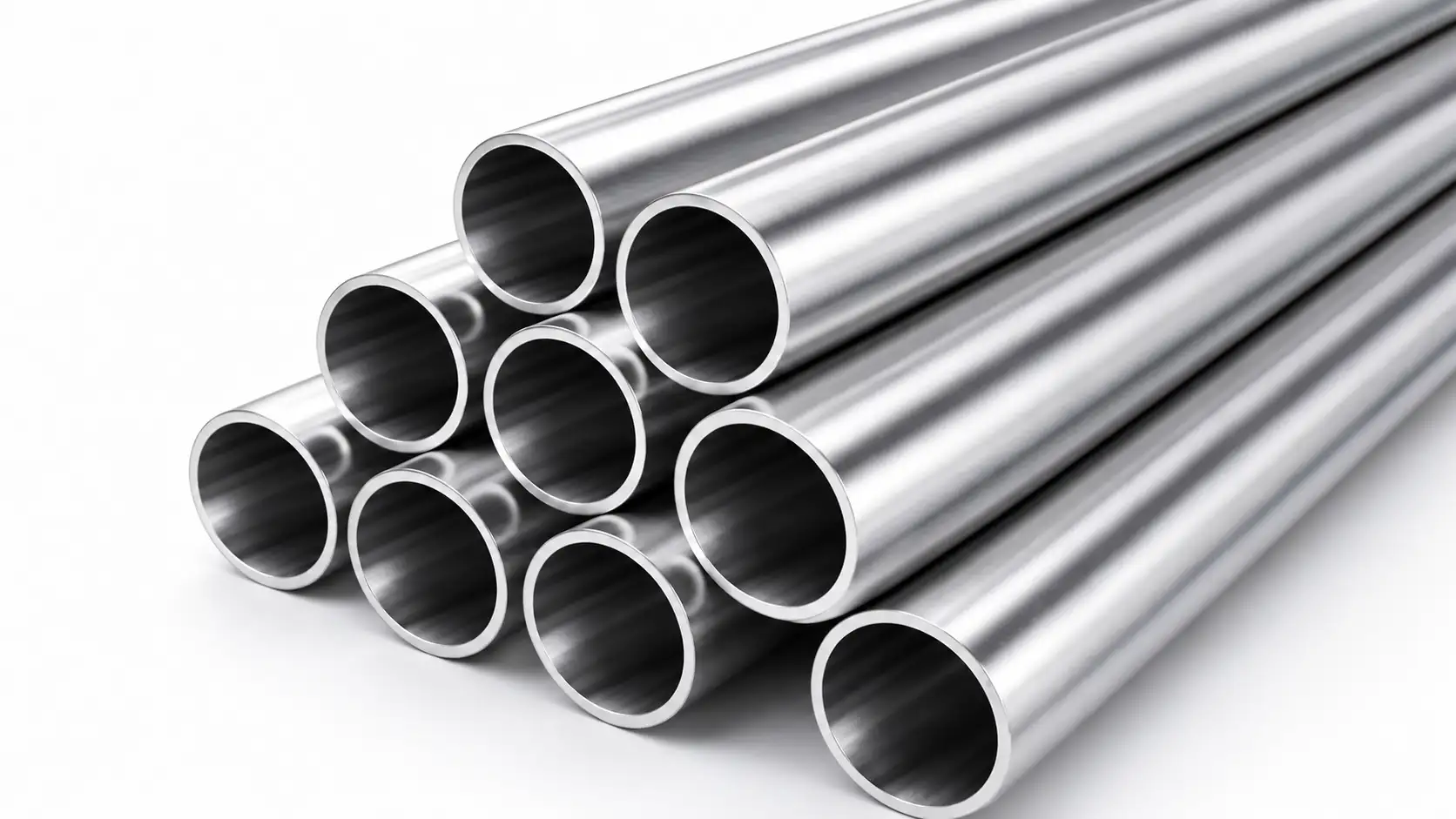
The choice between stainless steel and acid-resistant steel affects service life, maintenance requirements, corrosion resistance and total cost. For companies in construction, manufacturing and food production, choosing the right material is essential to ensure durable and reliable solutions.
Not all stainless steel materials are the same. Differences in composition affect the steel’s corrosion resistance, mechanical properties and suitability for different environments. In this guide, we review the most common types of stainless steel, compare 304 and 316, and explain when an acid-resistant grade is the best choice.
Types of Stainless Steel
Stainless steels are alloys consisting mainly of iron and chromium. The chromium forms a passive protective layer that gives the material its corrosion resistance and protects it against attack from moisture and various substances.
To improve its properties, nickel, carbon and other alloying elements are also added. Molybdenum is an important addition to the alloy, as it improves corrosion resistance in particularly demanding environments.
The most common types of stainless steel are:
- Austenitic Stainless Steels
- Ferritic Materials
- Duplex
- Martensitic Stainless Steel
Austenitic Stainless Steels
The most commonly used grades are found among the austenitic stainless steels. Austenitic stainless steel is characterised by high corrosion resistance, good formability and high toughness.
Austenitic steel is also characterised by excellent weldability, making this group of materials suitable for many applications. This includes 304 stainless steel and the acid-resistant grade 316.
Ferritic Materials
Ferritic grades generally contain less nickel than austenitic alternatives. Ferritic stainless steel, such as grade 430, is often a cost-effective option in less demanding environments.
Duplex and Martensitic Stainless Steel
Duplex stainless steel combines properties of both ferritic and austenitic materials. The result is high strength combined with good corrosion resistance. Martensitic grades are primarily used in applications where hardness and wear resistance are priorities.
What Is the Difference Between 304 and 316 Stainless Steel?
The comparison between 304 and 316 is one of the most common questions when selecting a material. Both belong to the austenitic stainless steel group, but differ in their content of various alloying elements.
304 Stainless Steel
304 stainless steel is the most widely used stainless steel material in the world. It offers good corrosion resistance, high formability and is relatively cost-effective.
For many indoor environments and standard outdoor applications, 304 is an excellent choice.
316 Stainless Steel
This steel grade contains molybdenum, which provides better corrosion resistance compared with 304.
This alloying element improves resistance to pitting and crevice corrosion, particularly in environments where salts or chemicals are present.
A common variant is 316L, a low-carbon version of 316 that is well suited for welding and the manufacture of advanced structures.
304 or 316 – Which Material Is Best?
If the environment is dry or moderately corrosive, 304 is often sufficient. In coastal environments or where chemicals are present, the acid-resistant grade is recommended.
In the process industry, this material is often the standard choice because it withstands cleaning chemicals and chloride-containing environments better than 304.
Below is an overview comparing the two steel grades:
| Property | 304 | 316 |
|---|---|---|
| Corrosion resistance | High | Very high |
| Molybdenum | No | Yes |
| Price | Low | High |
| Coastal environments | Limited suitability | Recommended |
| Chemical resistance | Normal | Superior |
When choosing between these steel grades, cleaning procedures, exposure to moisture, temperature variations and future maintenance requirements should also be taken into account. A material with a higher initial cost can often result in a lower total cost over time due to its longer service life and reduced maintenance requirements.
When Is Acid-Resistant Stainless Steel Required?
Materials with high corrosion resistance are used in environments where high resistance to chemical exposure is required.
The term acid-resistant steel usually refers to grades that contain molybdenum and therefore provide improved corrosion resistance.
Aggressive Environments
In aggressive environments where acids, chemicals and other corrosive substances are present, standard stainless steel may have a shorter service life.
Coastal environments
Salt in the air increases the risk of corrosion. For railings, façade components and other structures near the sea, acid-resistant stainless steel is often recommended.
Food Industry and Healthcare
In the food industry and healthcare sector, hygienic materials that can withstand frequent cleaning and disinfection are required. Materials with high corrosion resistance are often used in these environments due to their long service life.
Mechanical Properties and Applications
In addition to corrosion resistance, the mechanical properties of the steel are important when selecting a material.
Austenitic steels offer high toughness, good formability and excellent weldability. The material is alloyed with several elements to achieve the right balance between strength and corrosion resistance.
Stainless steel is used in:
- Food production
- Energy sector
- Chemical industry
- Water treatment
- Construction
- Healthcare
The materials are used in everything from small components to larger structures such as bridges and process plants.
The materials are often used in industrial processes where long service life, hygiene and high corrosion resistance are important requirements.
Stainless steel materials are also valued for their aesthetic appeal, making them an attractive choice for visible installations where design and durability need to be combined.
These materials are used in many different applications, ranging from simple building components to advanced process plants where high standards of durability and operational reliability are required.
How to Choose the Right Material
When choosing the right material, you should consider the following factors:
- The environment in which the material will be used
- Corrosion resistance requirements
- Exposure to chemicals
- Hygiene requirements
- Material thickness
- Budget and service life
If the application is not exposed to aggressive environments, 304 can be a cost-effective option. If the requirements are more demanding and the risk of corrosion is greater, the acid-resistant grade is often the best investment.
Frequently Asked Questions About Stainless Steel and Acid-Resistant Steel
Is 316 Always Better Than 304?
No. 316 offers better corrosion resistance, but it is also more expensive. For many standard environments, 304 is perfectly adequate.
What Is Acid-Resistant Steel?
Acid-resistant steel is typically stainless steel containing molybdenum, which provides improved corrosion resistance in demanding environments.
Can 304 Be Used Outdoors?
Yes. 304 often performs well in normal outdoor environments. However, 316 is generally recommended in coastal environments.
Conclusion
The choice between stainless steel and acid-resistant steel is about selecting the right material for the environment. For many standard applications, 304 is an excellent choice, while 316 provides better protection in environments where salts, chemicals or high humidity are present.
At G. Kinnvall AB, we help companies choose the right material for both standard solutions and custom applications. Please feel free to contact us if you need advice on 304, 316 or other stainless steel materials.
By choosing the right steel grade from the outset, you can reduce maintenance costs, extend the service life of your structures and ensure a more reliable solution over time.